EV Charger Panel Upgrades in Calgary
Compare charging current, circuit routing and listed load-management options before assuming a service upgrade is required. Confirm permit requirements for the exact property.
Compare EV project scopes
Do You Need a Panel Upgrade for an EV Charger?
Breaker spaces and incoming capacity are separate questions. Request a load calculation under the applicable Canadian Electrical Code, the selected charger specifications, and the existing service rating evidence. The design must also account for continuous loading and protective devices.
For a Calgary or Edmonton property, the utility connection response may matter if the service itself changes; a circuit-only installation may have a different scope. Confirm the accredited permit authority and distribution utility for the address before making a schedule.
For more than one vehicle, compare staggered charging, listed load-sharing controls and a verified service-capacity change. Ask which option is acceptable to the permit authority and utility for this address.
EV Charger Level Comparison
Document the receptacle, circuit rating and equipment instructions before assuming existing wiring is suitable.
Confirm conductor route, overcurrent protection, permit and calculated demand for the selected equipment.
Compare listed load-sharing equipment and an accepted load calculation against a utility service change.
Alberta-Specific EV Charging Considerations
Cold weather can affect vehicle charging behaviour, but it does not establish the right service size. Compare the vehicle and charger documentation, realistic charging schedule and calculated demand before selecting equipment.
Garage placement matters too. Most Alberta EV chargers are installed in attached or detached garages rather than on exterior walls — for obvious cold-weather reasons. If the panel is in the basement and the charger is in a detached garage, the cable run can be 15–30 metres, which affects wire sizing due to voltage drop. CEC Rule 8-102 limits voltage drop to 3% on branch circuits, and at 50A over 25 metres, the required wire gauge increases from #6 AWG to #4 AWG copper. We calculate this precisely on every installation to avoid performance issues.
The selected equipment and circuit location can affect protective-device and permit requirements. Have the qualified permit holder confirm the current Alberta code edition and equipment instructions; do not rely on a generic circuit size.
Frequently Asked Questions
Answers to the most common questions Alberta homeowners ask about this service.
Project hand-off
Discuss ev charger panel upgrade scope.
Share the property evidence and request an itemized review. No booking is implied.
Local knowledge / Calgary, Alberta
Plan new loads with the existing service
Calgary electrical permitting and ENMAX connection requirements are separate. A new enclosure does not confirm a larger approved supply. Keep the load calculation, permit scope and utility response together.
Calgary homeowner permits exclude changes to the main electrical service, main panel, main breaker and meter base. Have the electrical contractor confirm the applicable permit and inspection sequence, and utility isolation or service review where required.
Understand the Calgary process ↗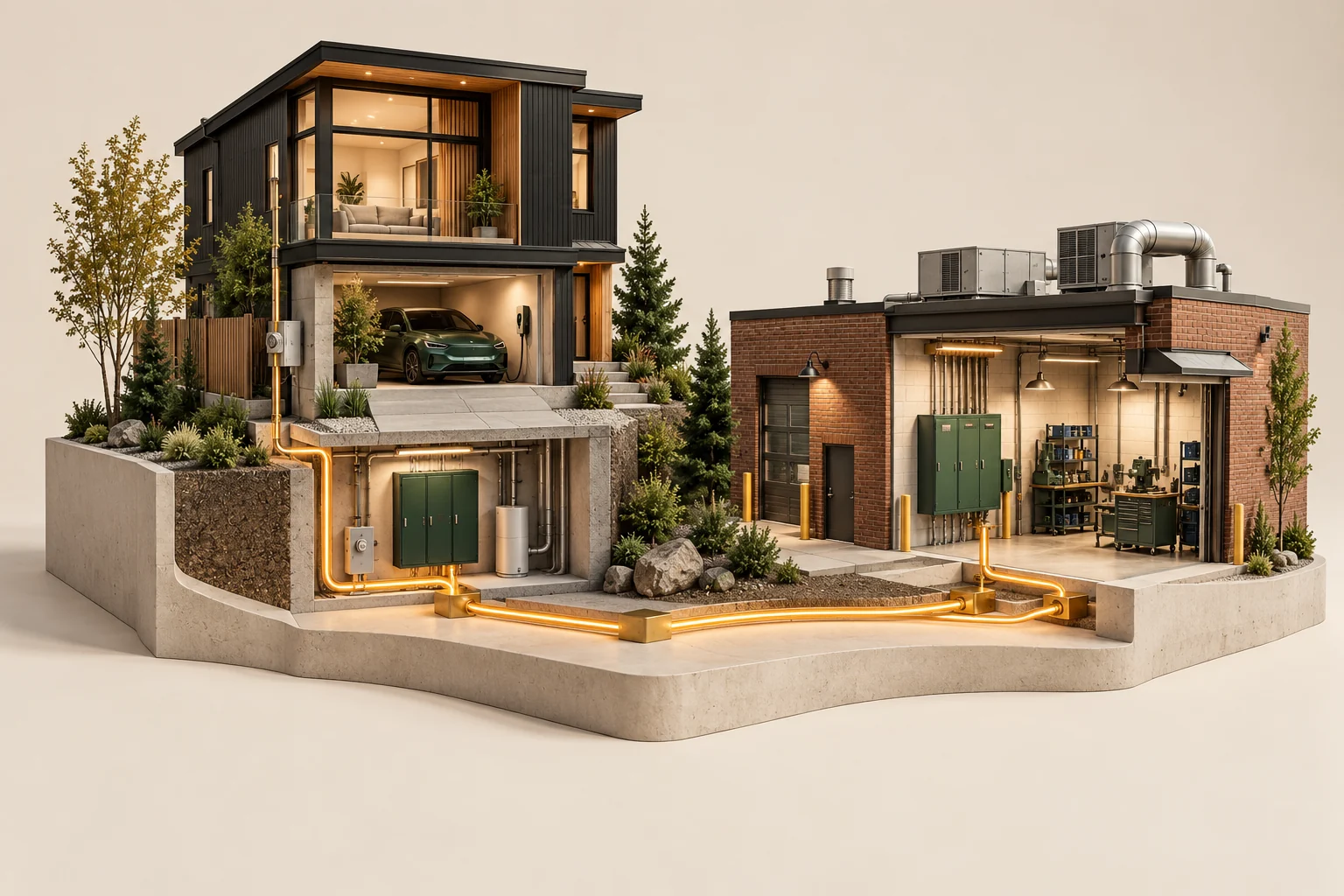
Calgary panel upgrade permits & ENMAX coordination
Two approvals, one coordinated project. Understand the City, the utility and the contractor’s roles before choosing a date.
Calgary process / 02Electrical panel upgrade cost in Calgary
Compare the whole scope: equipment, permit, utility work, access and restoration.
Calgary process / 03Calgary panel upgrade outage & shutdown planning
Plan the handoffs that keep a household or a business informed through a service interruption.
Your project / your next step
Request your
home upgrade quote.
Planning a panel replacement, EV charger, heat pump or suite? Request a residential quote right here.
Tell us what you are considering. The team can confirm the scope and whether a site assessment is needed.
For fire, smoke, sparks or immediate danger, move away and call 911 from safety. Do not approach the panel or wait for a website response.